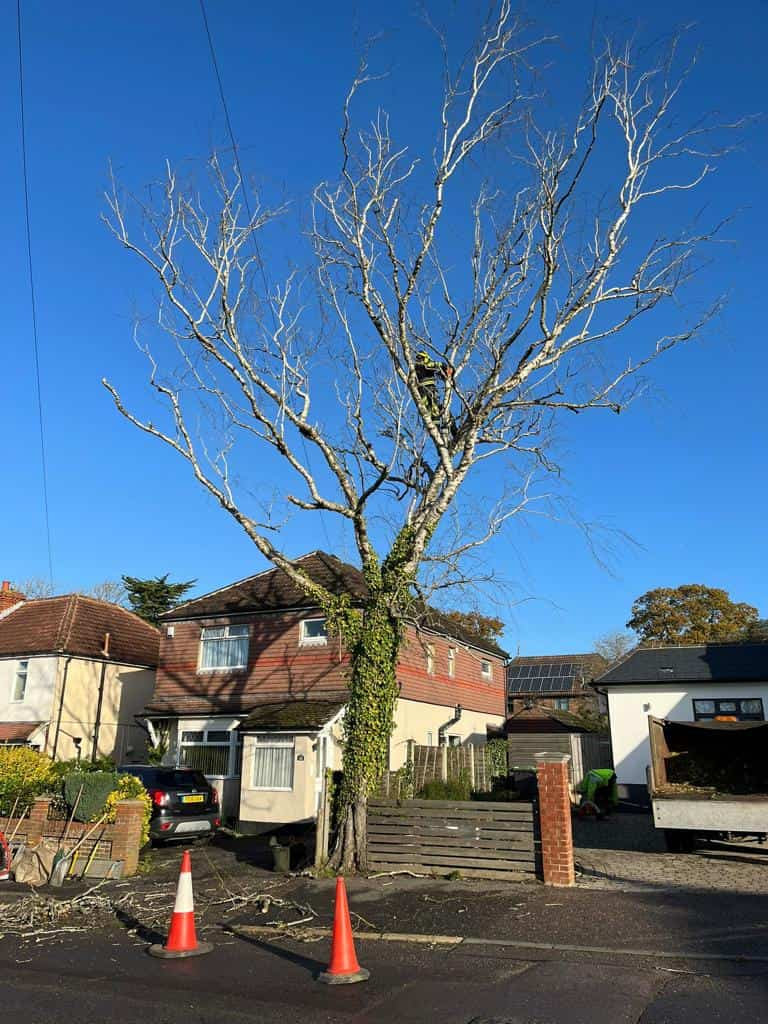
Professional tree trimming is an important part of keeping garden trees healthy, balanced and suitable for their surroundings. However, there is no single trimming schedule that works for every tree. Some trees may benefit from relatively regular attention, while others can remain in good condition for much longer periods without significant intervention.
For homeowners in Quedgeley, Gloucestershire, the most appropriate approach is to assess each tree individually. Its species, age, condition, growth rate, location and proximity to surrounding features can all influence how frequently professional trimming should be considered.
At EM Tree Surgery Quedgeley, we assess trees according to their actual condition and growth rather than trimming unnecessarily simply because a particular amount of time has passed.
Is There a Standard Tree Trimming Schedule?
Not really. Trees develop at different rates and respond differently to pruning.
A young, vigorous tree may produce substantial new growth relatively quickly, while a mature tree may change much more gradually. Two trees within the same garden can therefore have very different maintenance requirements.
Factors that influence trimming frequency include:
- Tree species
- Age and maturity
- Natural growth habit
- Overall health and condition
- Previous pruning
- Position within the garden
- Proximity to buildings and boundaries
- Density of the crown
- Presence of dead or damaged branches
Rather than relying on a fixed schedule, periodic professional assessment allows trimming to be carried out when there is a genuine reason for it.
Fast-Growing Trees May Need More Frequent Attention
Growth rate is one of the clearest factors affecting how frequently a tree may need trimming.
Some trees naturally produce vigorous growth and can quickly become larger or denser than intended within a garden setting. If left unmanaged for too long, branches may begin extending into areas where they create practical problems.
Regular professional attention can help maintain a suitable size and shape without waiting until excessive growth requires much more substantial work.
Mature Trees Often Need a Different Approach
Large, established trees do not necessarily require frequent heavy trimming.
With mature trees, careful management is particularly important because unnecessary removal of healthy growth can alter the natural structure of the crown.
Professional tree surgery should focus on what the individual tree actually requires. This might involve removing dead or damaged branches, reducing specific areas or carrying out carefully planned crown work rather than routinely cutting back the entire tree.
Previous Trimming Influences Future Maintenance
How a tree has been managed in the past can affect how quickly further attention becomes necessary.
Correctly planned pruning can encourage a more balanced structure and make future management more straightforward. Poor or excessive cutting, however, can sometimes encourage dense regrowth that soon requires additional attention.
This is one reason professional trimming is valuable. The objective should not simply be to make a tree smaller on the day the work is completed, but to consider how it is likely to respond afterwards.
Look at the Tree Rather Than the Calendar
The condition of the tree is often a better guide than the number of years since it was last trimmed.
Signs that professional assessment may be worthwhile include:
- Branches becoming excessively long or heavy
- Growth approaching roofs or buildings
- Dead branches developing within the crown
- Branches crossing or rubbing against one another
- The crown becoming unusually dense
- Significant imbalance in the tree’s shape
- Low branches obstructing access
- Growth extending into unwanted areas
- Broken or damaged limbs
These signs can indicate that some form of tree surgery may be beneficial even if the tree was trimmed relatively recently.
Trees Close to Buildings May Need Closer Monitoring
Location has a major influence on tree maintenance.
A tree growing in an open part of a large garden may have considerable space to develop naturally. The same species growing close to a property may require more careful management.
Branches extending towards roofs, walls or other structures should be monitored so that appropriate work can be planned before growth becomes excessively difficult to manage.
In these situations, regular professional inspections can be more useful than waiting until branches are already causing significant obstruction.
Garden Size Can Influence Trimming Requirements
A healthy tree can still become unsuitable for its surroundings if its natural mature size is too large for the available garden space.
In smaller gardens, controlling excessive spread may be important for maintaining:
- Usable outdoor space
- Access around the garden
- Suitable clearance from structures
- A balanced relationship with other planting
- Appropriate levels of light
Professional trimming can help manage trees within their surroundings while respecting their natural form wherever possible.
Crown Reduction May Help Manage Excessive Growth
Where a tree has become too large for its location, crown reduction may sometimes be appropriate.
Crown reduction involves carefully reducing the overall size or spread of the canopy while maintaining a balanced framework.
It is different from simply cutting branches back indiscriminately. The position of cuts, amount of material removed and natural structure of the tree all need to be considered.
A professionally completed crown reduction can make an oversized tree easier to manage and may reduce the need for more drastic intervention later.
Crown Thinning Has a Different Purpose
Not every tree requiring attention needs to be made substantially smaller.
Where the crown has become particularly dense, selective removal of suitable branches may improve its structure while retaining its general size and shape.
The correct approach depends on the individual tree, which is why professional assessment should come before deciding what type of trimming is required.
Dead and Damaged Branches Should Not Wait for a Routine Schedule
Routine trimming intervals become less relevant when a tree develops damaged, broken or dead branches.
These issues should be assessed when they become apparent rather than automatically waiting until the next planned maintenance visit.
Branches can deteriorate following weather exposure, natural ageing or other forms of damage. Removing unsuitable branches may help maintain a better crown structure and prevent damaged growth from remaining unnecessarily within the tree.
Overhanging Branches Can Signal That Trimming Is Due
Branches extending beyond the space available to them are a common reason homeowners consider professional tree trimming.
Overhanging growth can affect:
- Garden paths
- Seating areas
- Driveways
- Roof areas
- Outbuildings
- Other garden features
The aim should not necessarily be to remove every overhanging branch. Instead, the tree should be assessed to determine whether selective pruning or a broader crown management approach would produce the most appropriate result.
Why Regular Light Management Can Be Better Than Waiting
Allowing a manageable tree to become severely overgrown can make future work more substantial.
Where appropriate, periodic professional trimming can help maintain the tree’s size and structure through carefully selected cuts rather than requiring significant reductions after years of unrestricted growth.
This is particularly relevant where a tree occupies a restricted position within a garden.
Proactive management can help retain the tree as an attractive feature while keeping its growth appropriate for the available space.
Can Trees Be Trimmed Too Often?
Yes. More trimming is not automatically better.
Trees need healthy foliage and branches to function normally, and unnecessary pruning can interfere with their natural development.
Professional tree surgery should therefore have a clear purpose.
Rather than trimming simply because a tree has not been touched recently, the work should respond to factors such as structure, condition, excessive growth or the relationship between the tree and its surroundings.
Different Trees Respond Differently to Pruning
Tree species vary considerably in how they grow and respond to cutting.
This means the appropriate timing, method and extent of trimming should be selected according to the individual tree rather than applying the same technique throughout a garden.
Professional knowledge is particularly valuable when deciding:
- Which branches should be removed
- How much growth should be retained
- Where pruning cuts should be made
- Whether crown reduction is appropriate
- Whether only localised trimming is necessary
- Whether intervention is required at all
Good tree surgery is selective rather than excessive.
Why Professional Tree Trimming Matters
Tree trimming can involve working at height, handling substantial branches and making decisions that affect the future structure of the tree.
Professional tree surgeons have the equipment and experience required to assess the tree and carry out suitable work in a controlled manner.
At EM Tree Surgery Quedgeley, we provide professional tree surgery throughout Quedgeley, Gloucestershire, with attention to the condition, size and location of each tree.
The objective is to carry out the work the tree genuinely needs rather than removing more growth than necessary.
Regular Assessment Can Make Tree Management Easier
Homeowners do not necessarily need to arrange substantial tree work every year. However, keeping an eye on how trees are developing can make it easier to identify when professional attention would be useful.
A periodic assessment can determine whether the tree:
- Remains appropriately sized
- Has developed damaged branches
- Requires selective pruning
- Is becoming unbalanced
- Is growing too close to surrounding features
- Can continue developing without intervention
This provides a more sensible basis for tree maintenance than relying on a predetermined trimming interval.
Conclusion
There is no universal answer to how often trees should be professionally trimmed. The appropriate frequency depends on the species, growth rate, age, condition, previous pruning and location of the individual tree.
Some fast-growing trees in restricted garden spaces may require relatively regular management, while established trees with plenty of room may need much less frequent intervention. The most important principle is to trim trees because their condition or surroundings justify the work, not simply because a particular amount of time has passed.
If you have trees in Quedgeley, Gloucestershire, and are unsure whether they are due for trimming, EM Tree Surgery Quedgeley can assess their condition and recommend an appropriate approach. Contact our team to discuss professional tree trimming designed to keep your trees balanced, manageable and suited to your garden.
Call us on: 01452 941 558
Click here to find out more about EM Tree Surgery Quedgeley
Click here to complete our contact form and see how we can help with your trees needs.