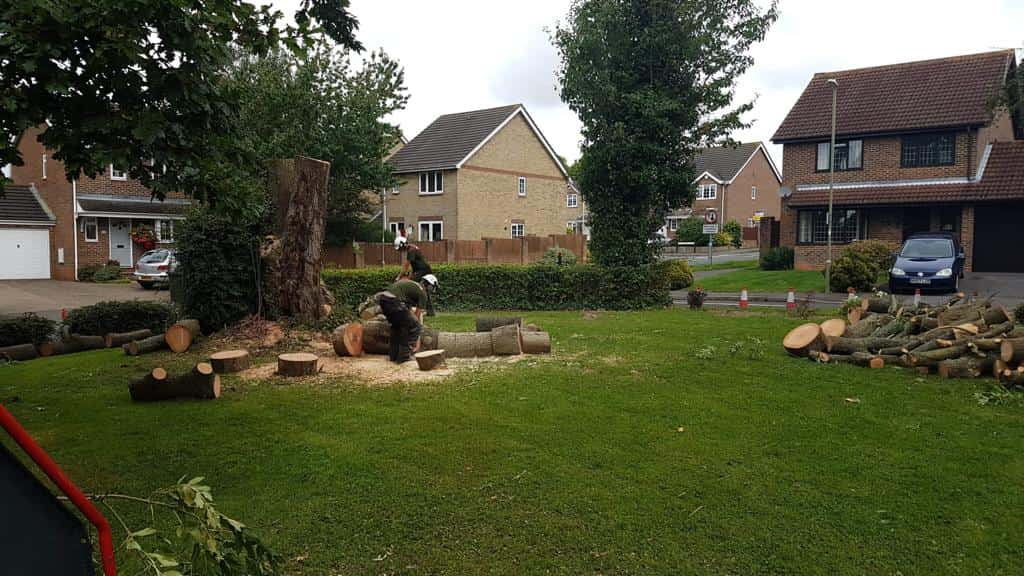
After a tree has been felled, the remaining stump can make a garden more difficult to use and maintain. It may obstruct mowing, restrict planting and become an awkward feature within an otherwise clear outdoor space.
Professional stump grinding provides a controlled way to reduce the stump below ground level without excavating the entire root system. For property owners in Quedgeley, Gloucestershire, the quality of the result depends on using appropriate equipment and planning the work around the site.
The Benefits of Professional Tree Stump Grinding
The Stump Is Assessed Before Work Begins
Stumps vary considerably in size, species, condition and root structure. A recently felled stump may still be dense and firmly rooted, while an older one may be decayed or partially hidden by surrounding growth.
A tree surgeon will consider:
- the diameter and height of the stump
- the extent of visible surface roots
- access for suitable machinery
- nearby walls, paving and garden features
- the intended future use of the area
- potential obstructions around the stump
This assessment helps determine the most suitable grinding approach and the depth required.
Specialist Machinery Produces a More Effective Result
A stump grinder uses a rotating cutting wheel to reduce timber into small wood chips. Professional equipment is designed to work through dense wood and surface roots in a controlled sequence.
Attempting to remove a substantial stump with hand tools can be extremely labour-intensive and may still leave a large portion beneath the surface. Burning, pulling or using unsuitable machinery can also damage the surrounding ground without achieving a clean result.
Grinding Depth Can Match the Area’s Future Use
The stump does not always need to be ground to the same depth. The appropriate level depends on what will happen to the space afterwards.
Shallow grinding may be sufficient where the aim is simply to remove a visible obstruction. Deeper grinding may be necessary if the area is intended for turfing, planting or another garden improvement.
Discussing the intended use in advance allows the tree surgeon to plan the work accordingly.
Nearby Surfaces Can Be Protected
Tree stumps are often located close to paths, fences, patios, sheds or planting beds. Grinding requires careful control to avoid unnecessary disturbance to these surrounding features.
A professional can select suitable machinery, establish an appropriate working area and direct the cutting process accurately. Protective measures can also help contain flying wood chips and debris.
Different Machines Suit Different Access Conditions
Not every garden provides wide or straightforward access. Gates, steps, narrow passages and changes in ground level may limit which machinery can reach the stump.
Professional tree surgeons have access to different grinder sizes and can assess whether equipment can be moved into position safely. This is particularly important in established gardens where surrounding features need to remain undisturbed.
Surface Roots Can Be Addressed Where Necessary
Some trees produce prominent roots that extend beyond the main stump. These may interfere with mowing, paving or plans for the cleared area.
A stump grinding service can include selected surface roots where appropriate. However, it is important to understand that grinding the visible stump does not remove every underground root. The remaining root system usually stays in the soil and breaks down gradually.
It Reduces the Chance of Regrowth
Certain tree species can produce new shoots from a cut stump or remaining roots. Grinding away the main stump removes much of the material from which regrowth is most likely to emerge.
This can significantly reduce the problem, although the response varies between species. A tree surgeon can assess the stump and explain whether further monitoring may be useful.
The Area Becomes Easier to Maintain
A low stump can damage mowing equipment or create an obstacle beneath grass and vegetation. It may also make borders difficult to redefine and prevent the ground from being levelled properly.
Once the stump has been ground, the area can usually be cleared and prepared more effectively. This creates greater flexibility for lawn maintenance, planting or redesigning the garden.
The Arisings Can Be Managed Properly
Stump grinding produces a mixture of wood chips and soil. Some material may be useful as mulch in suitable parts of the garden, while excess arisings may need to be removed.
The ground can settle after loose material has been cleared or used to fill the grinding hole. The correct finishing approach will depend on whether the area is being left temporarily, turfed or prepared for another purpose.
Professional Work Includes a Planned Finish
Grinding the stump is only one part of the job. A well-managed service should also consider access, protection of surrounding areas, debris control and the condition in which the space will be left.
Clarifying these details before work begins helps ensure that the completed area is suitable for the next stage of the garden project.
Conclusion
Professional stump grinding provides an efficient and controlled way to remove a visible tree stump, address selected surface roots and make the surrounding area easier to use. Specialist equipment, careful assessment and an appropriate grinding depth all contribute to a more practical result.
If you have an unwanted stump in Quedgeley, Gloucestershire, contact EM Tree Surgery Quedgeley. Our team can assess its size, location and access requirements before recommending a suitable stump grinding approach.
Call us on: 01452 941 558
Click here to find out more about EM Tree Surgery Quedgeley
Click here to complete our contact form and see how we can help with your trees needs.