Removing a tree is far more complex than cutting through the trunk and allowing it to fall. The tree’s size, weight, condition and surroundings must all be assessed before any work begins. Branches may extend over buildings, fences or planting, while internal decay can make the tree behave unpredictably during cutting.
For property owners in Quedgeley, Gloucestershire, professional tree removal provides a controlled approach based on careful planning, suitable equipment and proven working methods. This helps protect the surrounding property while ensuring that each stage of the removal is completed appropriately.
Why Tree Removal Requires Professional Planning and Skill
No two tree removals are exactly alike. A tree in an open area may be suitable for directional felling, while one in a restricted garden may need to be dismantled gradually in sections. A professional tree surgeon determines the correct method after assessing the complete site.
The Tree’s Condition Must Be Understood
A tree may look relatively stable from the outside while containing decay, cavities or weakened branch unions. Deadwood and damaged limbs can also detach unexpectedly when the tree is climbed or moved.
Before work begins, a tree surgeon should examine:
- The trunk and main branch structure
- Visible cracks, cavities or decay
- Dead or hanging branches
- The direction and balance of the canopy
- Root plate condition
- Previous pruning or storm damage
- Nearby buildings and garden features
- Available access for machinery
This assessment influences how the tree can be removed and which sections require additional control.
Tree Weight Is Easy to Underestimate
Large branches and trunk sections can weigh considerably more than their appearance suggests. Once cut, their direction of movement may change rapidly due to gravity, canopy tension or an uneven distribution of weight.
Professional tree surgeons understand how different cuts release tension within timber. They can plan manageable section sizes and determine whether material can be lowered directly or requires rigging equipment.
Directional Felling Is Not Suitable Everywhere
Directional felling involves bringing down the tree in a planned direction as one complete unit. This method requires sufficient clear space and a reliable understanding of the tree’s structure and natural lean.
Trees growing close to buildings, paths, boundaries or other garden features often cannot be felled in this way. Attempting to do so without adequate space can result in the tree falling beyond the intended area.
Sectional Dismantling Provides Greater Control
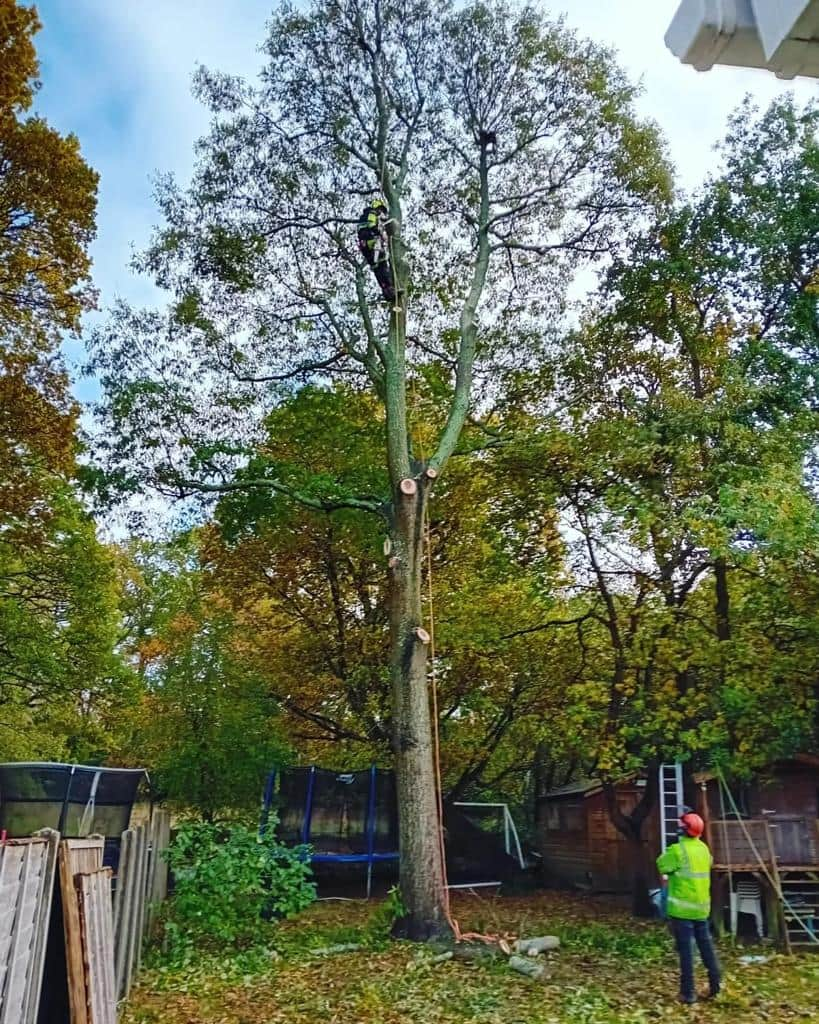
Where space is restricted, the tree may need to be dismantled progressively. The tree surgeon removes branches and trunk sections in a planned sequence, working from the crown downwards.
Rigging ropes, lowering devices and suitable anchor points can be used to control cut material. This approach helps prevent large sections from dropping freely onto lawns, paving, roofs or surrounding planting.
Specialist Equipment Supports Controlled Work
Safe and efficient tree removal can require more than a chainsaw. Depending on the location and condition of the tree, the work may involve:
- Climbing and positioning equipment
- Rigging ropes and pulleys
- Controlled lowering systems
- Mobile platforms
- Wood chippers
- Stump grinders
- Ground protection
- Specialist cutting equipment
The equipment must be selected for the particular tree and used by people who understand its limitations.
Ground Conditions Affect the Removal Plan
Wet, soft or uneven ground can influence machinery access and the stability of the working area. Sloping gardens, narrow entrances and delicate paving may also restrict how equipment and cut timber can be moved.
A professional site assessment allows access routes and working zones to be planned before removal begins. Ground protection may be used where necessary to reduce avoidable disturbance.
Nearby Property Features Need Protection
Trees are rarely positioned in completely open spaces. Branches may overhang sheds, patios, driveways, fences or established planting.
The removal method should account for each feature. Cut material may need to be lowered into a designated area, processed into smaller sections or transported along a carefully planned route.
Wind and Weather Can Change Working Conditions
Tree canopies present a large surface area to the wind. Even moderate movement can make accurate cutting and controlled lowering more difficult.
Wet conditions can also affect grip, access and ground stability. Professional tree surgeons assess conditions before and during the work, adapting the plan where necessary rather than continuing with an unsuitable method.
Damaged Trees Can Behave Unpredictably
Storm-damaged, split or partially uprooted trees can contain stored tension. A branch may be supporting another part of the canopy, while a leaning trunk may shift when its weight distribution changes.
Standard cutting techniques may not be appropriate in these situations. Professional expertise is particularly important because the tree’s movement can change suddenly as sections are removed.
Removing the Tree Is Only Part of the Work
Once the tree is down, branches and trunk sections must be processed and removed from the working area. The remaining stump may also interfere with mowing, planting, paving or future landscaping.
Stump grinding can reduce the stump below ground level and make the space easier to reuse. The appropriate grinding depth depends on what is planned for the area afterwards.
Why DIY Tree Removal Is Risky
Attempting to remove a tree without suitable training can lead to uncontrolled falls, trapped cutting equipment and unexpected movement within branches or trunks. Ladders and unsuitable ropes provide little control over heavy timber.
Even a relatively small tree can cause substantial damage if its weight, lean or branch tension is misjudged. Professional removal replaces guesswork with a planned sequence and appropriate control measures.
What to Expect From a Professional Assessment
A tree surgeon should inspect the tree and its surroundings before recommending a method. The assessment should explain:
- Why removal is considered appropriate
- Whether felling or sectional dismantling is suitable
- How branches and trunk sections will be controlled
- What access and equipment are required
- How nearby features will be protected
- Whether stump grinding should be included
- How the site will be left after the work
This provides a clear understanding of how the removal will be approached.
Conclusion
Safe tree removal depends on understanding the tree’s structure, controlling the movement of heavy timber and selecting a method suited to the surrounding space. Professional expertise is particularly important where trees are damaged, difficult to access or positioned close to property features.
EM Tree Surgery Quedgeley provides professional tree removal services in Quedgeley, Gloucestershire. If you have a tree that may need to be felled or dismantled, contact the team to arrange an assessment and discuss the most appropriate approach.
Call us on: 01452 941 558
Click here to find out more about EM Tree Surgery Quedgeley
Click here to complete our contact form and see how we can help with your trees needs.